Salon MCA Debt: Escape the Daily Debit Pressure

Daily MCA debits and volatile salon revenue are a brutal combination. Here's how negotiated resolution helps owners cut the advance burden without another loan.
You Did Everything Right — Then the Debit Hit

It’s 7am on a Tuesday. You open your banking app before the first client walks in, and there it is — the MCA debit already cleared. Four hundred and eighty dollars, gone before you’ve steamed a single towel or mixed the first color bowl. You’ve got three stylists coming in, a product delivery due Thursday, and chair rental collecting on Friday. The advance that was supposed to smooth out a rough month is now the reason Tuesday feels impossible.
If you own or operate a salon, spa, or personal-care studio and you’re in this position, you are not alone — and you are not out of options. MCA daily debits hit salon businesses differently than they hit a contractor invoicing project by project or a retailer moving inventory. Salon revenue is appointment-driven, tip-volatile, and heavily concentrated on weekends. When a funder models repayment on your strong Q4 holiday season or Valentine’s Day rush — and then pulls $400 to $600 every business day through the slow middle of the year — the math doesn’t hold.
This article walks through why salon and spa owners are especially vulnerable to MCA stacking, what your contract actually says, and what options exist — including negotiated resolution and structured settlement — for owners ready to stabilize their cash flow without signing another advance to cover the last one.
Appointment-Based Revenue and the Daily Debit Problem
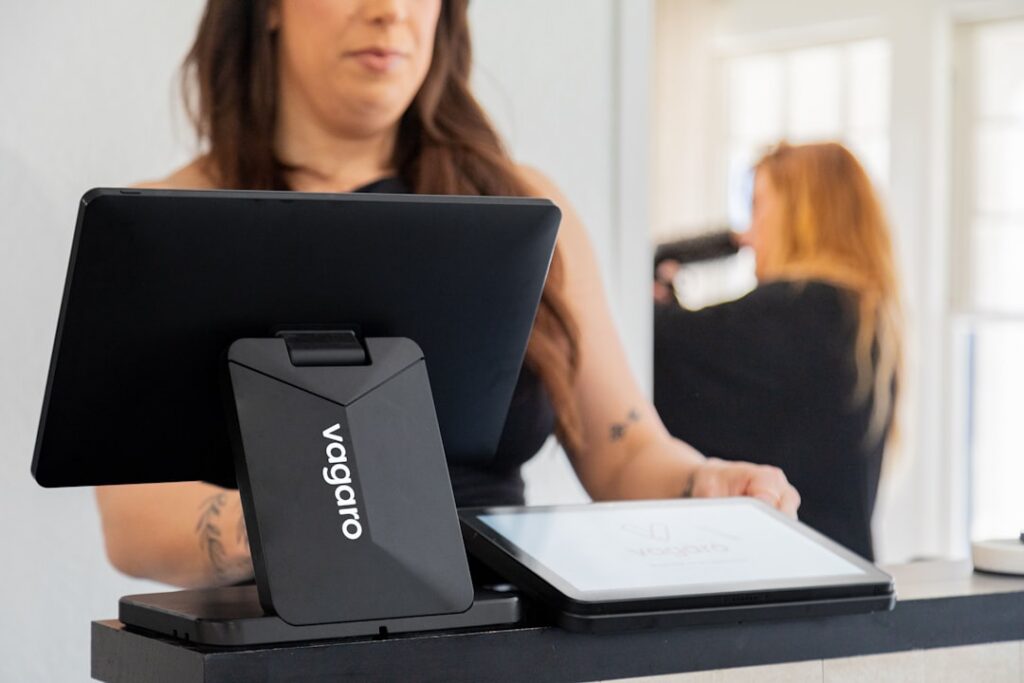
Most MCA funders underwrite based on gross deposits — your average monthly card and cash revenue. For a salon doing $50,000 a month in services, that number looks solid. What the funder doesn’t model is the distribution of that revenue: heavy Friday through Sunday, quiet Monday and Tuesday, soft in January and late August, packed in December and Valentine’s week.
The Federal Reserve’s Small Business Credit Survey consistently shows that personal-services businesses — salons, spas, barbershops — are among the highest users of alternative financing, including MCAs, in part because traditional bank credit is harder to access without multi-year financials or hard collateral. The same survey shows these businesses are also among the most likely to report cash-flow stress and unmet financing needs.
When the daily debit hits on a Monday and your strong Saturday deposit hasn’t fully cleared — or when your top stylist called out sick and you ran 35% of your expected volume — the debit still processes. Every day, on schedule, regardless of what the business actually earned. That’s the structural problem with MCAs for appointment-based businesses: the product is built around your average revenue, but your actual revenue doesn’t arrive evenly. The gap between those two realities is where salon owners get crushed.
Reconciliation clauses exist in some MCA contracts to theoretically address this — they allow a business owner to request an adjustment to the daily amount based on actual receivables. In practice, CFPB research on small business lending documents that many owners were not clearly informed about adjustment provisions at signing. If your contract has a reconciliation clause your funder hasn’t mentioned, that conversation is worth having — preferably with someone who knows how to make it stick.
How One MCA Advance Becomes Three

It starts with a single advance: $40,000 for a salon build-out, new equipment, or simply covering a rough January after a strong December. The daily debits begin at $280. That’s manageable — until spring, when your star colorist takes her book to a chair across town. Revenue drops 25%. The $280 debit is now coming out of a noticeably smaller pool.
You reach back to the funder for relief. They offer more capital — or a second funder steps in, willing to advance $25,000 even with the first balance still outstanding. Now you have two daily debits: $280 and $210. The $490 combined daily pull is the new normal, until a slow stretch hits and it’s no longer sustainable. A third advance to cover the gap. Then the first funder offers a renewal. Suddenly you’re carrying $1,100 a day in debits on a business with good weeks and bad ones.
This is the MCA stacking spiral — and it’s not financial mismanagement. It’s the predictable result of a funding product that doesn’t flex with your business cycle. The Small Business Administration identifies cash flow management as the top challenge for small service businesses, and MCAs, by design, convert a short-term liquidity problem into a long-term daily debit burden. Stacked advances are one of the most common situations MCA Relief Specialists handle — and one of the most solvable.
What's Actually in Your MCA Contract

Understanding your contract is step one. An MCA is not a loan — it’s a purchase of your future receivables. Instead of an interest rate, you pay a factor rate. If you received $40,000 and signed at a 1.40 factor rate, you owe $56,000 total regardless of how long repayment takes. The annualized effective cost of that advance can run 60%, 80%, even 120% or more depending on the daily debit pace. Most salon owners who signed didn’t have those numbers laid out in plain terms before they did.
When you signed, your funder almost certainly filed a UCC-1 financing statement against your business assets under Article 9 of the Uniform Commercial Code. This is a public lien that notifies other creditors — including any bank you’d approach for traditional financing — that the MCA funder holds a claim on your future receivables. With multiple funders, you may have multiple UCC-1 filings stacked against the business. Every one of them needs to be addressed in any resolution or settlement process.
Some contracts also include a personal guarantee, which extends funder claims to your personal assets if the business can’t perform. And in states where they remain enforceable, some contracts carry a confession of judgment — a clause that allows the funder to obtain a court judgment without a full trial. Knowing exactly what’s in each of your MCA contracts isn’t just useful — it’s essential before you decide on a path forward. An MCA Options Specialist or a qualified business attorney can review your specific terms and tell you honestly what your exposure looks like.
Negotiated Resolution: What It Looks Like for Salon Owners

“Negotiated resolution” is the umbrella term for working out a modified arrangement with one or more MCA funders — a structured payment plan, a lump-sum settlement at a reduced balance, or some combination of the two. For salon owners carrying stacked advances, the goal is almost always the same: get the daily debit pressure off the business long enough to restore cash flow and return to running the salon instead of running from the daily pull.
Here’s what the process typically involves. First, a specialist reviews your full funder stack — every contract, every outstanding balance, every UCC-1 filing, every personal guarantee. Then a hardship case is built: your actual revenue numbers, your fixed overhead, the gap between the two, the history of short or bounced debits. Funders that operate at scale — including companies like Forward Financing, Everest Business Funding, OnDeck Capital, and Funding Metrics — have established workout processes. They know some percentage of their portfolio ends up in distress, and they generally prefer a structured resolution over a prolonged default battle.
That doesn’t mean funders concede automatically. Negotiating with an MCA funder is not a conversation most salon owners are equipped to have alone — the documentation standards, the timing, and the framing all affect what funders are willing to consider. The core leverage point is a well-documented hardship case that makes the business’s actual situation clear and demonstrates that a modified arrangement produces better recovery than pursuing default. A specialist who knows that process knows how to build that case — and how to move funders toward yes.
What Past Settlements Have Looked Like

To give you a concrete sense of what structured negotiation has produced in past cases, here are outcomes drawn from actual completed matters:
- An original MCA balance of $47,968 resolved at $13,000 — a 73% reduction from the outstanding balance.
- A five-funder stack with combined balances exceeding $200,000, resolved through a structured plan that cut total daily obligations by more than 80%.
- A single-funder balance of $62,000 settled for $18,500 in a lump-sum arrangement following a documented hardship submission.
Results vary and are not guaranteed. Past performance does not predict future results, and every funder — and every situation — is different. But these numbers come from real cases, and they show what structured negotiation with thorough preparation has made possible. For a salon owner carrying $80,000, $120,000, or $200,000 in combined MCA balances, the math of resolution can look dramatically better than the math of continuing daily debits that the business can’t sustain.
The variable that matters most is the quality of the hardship documentation and the expertise of the specialist presenting it. Funders evaluate revenue history, debit-to-revenue ratios, the business’s forward outlook, and whether the owner is engaging in good faith. A well-prepared file — with a realistic settlement target and clean documentation — changes the conversation from adversarial to transactional. That’s where deals get done.
Your Next Step: Get the Pressure Off

If you’re a salon or spa owner carrying MCA debt that no longer fits what your business can sustain, the most important thing to understand is this: you have real options beyond signing another advance to cover the last one. Negotiated resolution, structured settlement, and reduced-balance payoffs have helped business owners in exactly your position restore their cash flow — and get back to running the business instead of managing a daily debit crisis.
Before you make another payment you can’t afford — and especially before you sign another advance — speak with an MCA Relief Specialist who can review your full funder stack and tell you honestly what resolution might look like. Most owners who finally reach out are surprised at what’s possible. The conversation costs nothing. Waiting until debits start bouncing costs you leverage and options.
This information addresses commercial business debt and is not consumer debt advice. Results vary and are not guaranteed — creditors may not always agree to proposed terms, and every situation is different. Past performance does not predict future results. For guidance on your specific circumstances, consult an MCA Options Specialist or a qualified business attorney before making decisions about your MCA obligations.
Photo credits: Featured image by Cova Software on Unsplash; Section 1 by Antoine Pouligny on Unsplash; Section 2 by Vagaro on Unsplash; Section 3 by Firmbee on Pixabay; Section 4 by Vitaly Gariev on Unsplash; Section 5 by ZaidAysh_Graphix on Pixabay; Section 6 by Vitor Monthay on Unsplash; Section 7 by RDNE Stock project on Pexels.