Restaurant MCA Debt: Why Food Service Gets Hit Hard

Restaurants are among the most common MCA borrowers — and the most frequent casualties. Here's why the daily debit model is especially punishing for food service, and what owners have done to get out.
Why Restaurants Are the MCA Industry's Favorite Customer

Walk into any MCA funder’s portfolio and you’ll find restaurants everywhere. Food service businesses represent one of the highest concentrations of MCA borrowers across the industry — and it’s not a coincidence. Restaurants process credit cards daily, generate consistent deposit volume that shows up clearly in bank statements, and are often owned by operators who have poured everything they have into the business and can’t afford a slow month. They are, from an underwriting standpoint, the ideal MCA customer: high revenue activity, desperate for fast capital, and unlikely to walk away from a business they’ve built from nothing.
They are also, in practice, among the most frequent MCA casualties. Restaurant profit margins run thin — typically 3–9% net on a good month according to NFIB small business data. A daily ACH debit that looks manageable against gross revenue becomes devastating against actual net cash. When daily debits represent 10–20% of gross revenue, a restaurant with 5% net margins is effectively operating at a loss every single day the advance is running.
Understanding why restaurants are so vulnerable to MCA stacking — and what the most successful operators have done to get out — is the starting point for any restaurant owner who recognizes their own situation in this description.
The Daily Revenue Pattern MCAs Are Built Around
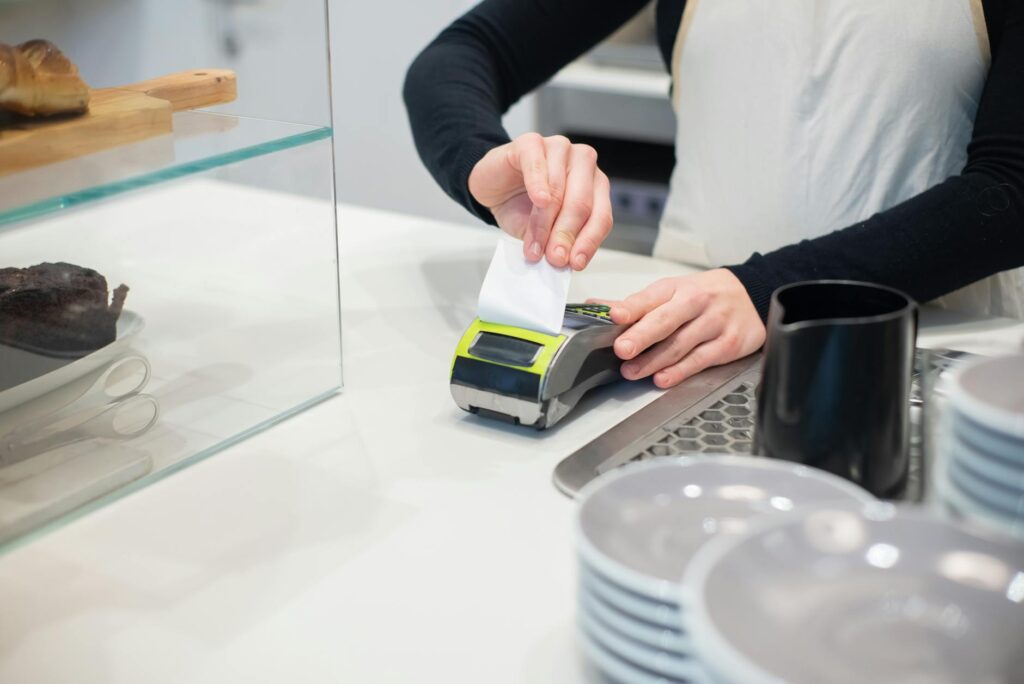
Merchant cash advances were originally designed around a simple model: the funder takes a fixed percentage of daily credit card receipts until the advance is repaid. For a restaurant processing $3,000–$5,000 per day in cards, that model is nearly seamless — the debit is proportional to revenue, so slow days produce smaller payments and busy days produce larger ones.
The problem is that most modern MCA agreements have shifted from percentage-based remittance to fixed ACH debits — a set dollar amount hitting the account every business day regardless of what revenue actually came in. A restaurant that does $5,000 on Saturday and $800 on a slow Tuesday afternoon pays the same daily debit amount on both days. The fixed debit structure eliminates the cushion that the original percentage model was supposed to provide.
The Consumer Financial Protection Bureau’s small business lending data documents the growth of fixed-payment alternative financing products as a share of small business credit — and the elevated distress rates among borrowers of these products compared to traditional financing. For restaurants specifically, fixed daily debits against variable revenue is a formula that eventually breaks. The question is when, not if, once the stack grows large enough.
Seasonal Swings and the Stacking Spiral

Restaurant revenue is not flat. It swings with seasons, with weather, with events, with a bad Yelp review or a great one. January is brutal for most restaurants in cold-weather markets. Summer is often strong. The holiday season is a wildcard — big catering revenue for some, dead slower for others depending on the concept.
The pattern we see constantly: a restaurant takes an MCA in January to cover a slow month. The advance runs through February and March. In April, business picks up and the payments become manageable. But then payroll taxes come due, the walk-in breaks down, and the owner needs another advance to cover both. By June, there are two funders running simultaneously. In August — a strong month — the owner thinks the business can support a third to finally get ahead of the backlog. By October, three funders are pulling a combined $1,800/day from an account that does $3,200/day on average. A normal slow week in November breaks the math completely.
This spiral plays out in restaurants across every region and concept type. It’s not a management failure — it’s a structural trap that MCA underwriting enables by looking at gross revenue without regard for the fixed costs, the seasonality, or the existing advances already running. The Federal Reserve’s Employer Firms data confirms that hospitality and food service businesses carry higher financing-related stress than most other small business categories.
What Happens When a Slow Week Hits a Stacked Restaurant

Three funders, $1,800 combined daily debits, a Tuesday through Thursday where the restaurant did $2,200/day between lunch and dinner. After the debits clear, the owner has $400/day to cover food orders, staff wages, utilities, POS fees, and everything else the restaurant needs to stay open. It’s not enough. By Wednesday, the owner is transferring personal funds to cover Thursday payroll. By Friday, one of the debits bounces. By Monday, the calls start.
This scenario is not extreme — it is typical for stacked restaurant owners in their final weeks before seeking help. What makes restaurants particularly vulnerable is the difficulty of cutting costs quickly. You can’t lay off the line in the middle of a shift. You can’t tell your food distributor to hold the Tuesday delivery. The fixed operating structure of a restaurant means that when cash flow breaks, it breaks hard and fast.
The owners who navigate this successfully are the ones who recognize the spiral before the bounce happens — who look at the math, see where it leads, and make the call to get outside help before the first debit returns. The ones who wait until the first NSF often find the situation more complicated to resolve, not impossible, but more complicated. Earlier is always better.
Settlement Results in Food Service Cases

Restaurant operators who have gone through negotiated MCA resolution have achieved outcomes that genuinely changed the trajectory of their businesses. Here are the types of results that have been possible in past completed cases — keeping in mind that results vary and past performance does not predict future results:
- A food service business with a $47,968 outstanding MCA balance resolved it for $13,000 — a 73% reduction — through a lump-sum settlement negotiated before the account went to litigation
- A restaurant with $22,050 outstanding on an advance settled for $11,000 payable at $1,000/month over 11 months, with full UCC release on final payment
- A hospitality business facing a $193,028 judgment avoided the litigation entirely and settled for $100,000 — a 48% reduction — after specialist-led negotiation
These outcomes reflect the reality that even after default — even facing legal action — the settlement window remains open. MCA funders, including some of the largest names in the industry like OnDeck Capital and Forward Financing, have established processes for settlement that experienced negotiators can engage effectively. The key is knowing how to approach those conversations and what documentation supports a credible offer.
How Successful Restaurant Owners Got Out

The restaurant owners who successfully resolved stacked MCA debt share a few common patterns. They stopped trying to manage the situation with another advance. They got a complete picture of the full stack before taking any action. They engaged experienced specialists instead of negotiating directly with funders from a position of stress and limited leverage. And they acted before the situation reached maximum severity — before judgments, before lockbox accounts, before the bank account was levied.
The goal of resolution was always the same: eliminate the daily debit burden through settlement, restore working capital, and create enough breathing room to actually run the restaurant again. For some, that meant settling each funder individually at different reduction percentages based on each one’s recovery position. For others, it meant a coordinated multi-funder settlement that resolved the entire stack in one process.
The businesses that recovered strongest used the cash flow relief from settlement to reinvest in the fundamentals — food quality, marketing, staff stability — that drive restaurant revenue over the long term. The debt was the obstacle. Removing it was the starting point, not the finish line.
If Your Restaurant Is Drowning in MCA Debt

If you’re running a restaurant right now and multiple daily debits are consuming your operating cash, you already know the math isn’t sustainable. The question is what to do next.
Start here: write down every MCA you have — funder name, outstanding balance, daily debit amount. Add the daily debits together and compare that number to your actual average daily revenue on a slow week, not your best week. If the debits are eating more than 15–20% of average daily revenue, you are past the point where growth can solve this. You need a structural solution.
Speak with an MCA Options Specialist who works specifically with businesses in your situation. Not a company selling you another advance. Not a generic “debt relief” firm. Someone who understands the MCA industry specifically — how funders evaluate recovery, what settlement terms are realistic, and how to sequence the resolution process to protect your business at each step.
This article is general information about commercial business debt and is not consumer debt advice or legal or financial guidance for your specific situation. Results vary and are not guaranteed. But restaurants have gotten out of stacked MCA debt — at significant reductions — and the first step is always the same. Make the call.
Photo credits: Featured image by Gustavo Fring on Pexels; Section 1 by Willian Justen de Vasconcellos on Pexels; Section 2 by Kampus Production on Pexels; Section 3 by Saurabh Deshpande on Pexels; Section 4 by Nicola Barts on Pexels; Section 5 by RDNE Stock project on Pexels; Section 6 by Airam Dato-on on Pexels; Section 7 by Kampus Production on Pexels.