MCA Debt and Tariffs: Import Business Cash Crunch

Tariffs are forcing import-dependent businesses into stacked MCA debt. Here's why it happens and what real relief options exist.
Tariffs Are Pushing Import Businesses Into MCA Debt

If you import product and you’re staring at a customs duty bill that’s two or three times what it used to be, you’re not imagining things and you’re not alone. Tariffs have turned a manageable line item into a business-threatening cash gap for thousands of small importers over the past year, and a lot of owners have plugged that gap the only way that seemed available at 4pm on a Friday: a merchant cash advance.
Here’s the problem nobody explains at the moment you need fast cash. An MCA doesn’t fix a tariff-driven cash flow gap. It borrows against next month’s revenue to cover this month’s duty bill, and if the tariff pressure doesn’t let up, you’re taking a second advance to cover the first one’s daily debit. That’s how a single rough shipment turns into stacked MCA debt.
The good news, and it’s real good news: this is fixable. There are structured ways out of stacked advances that don’t involve another high-cost loan, and understanding how tariffs create this trap in the first place is the first step toward getting out of it.
Why Tariffs Create a Cash Flow Crisis Before You Ever Sell
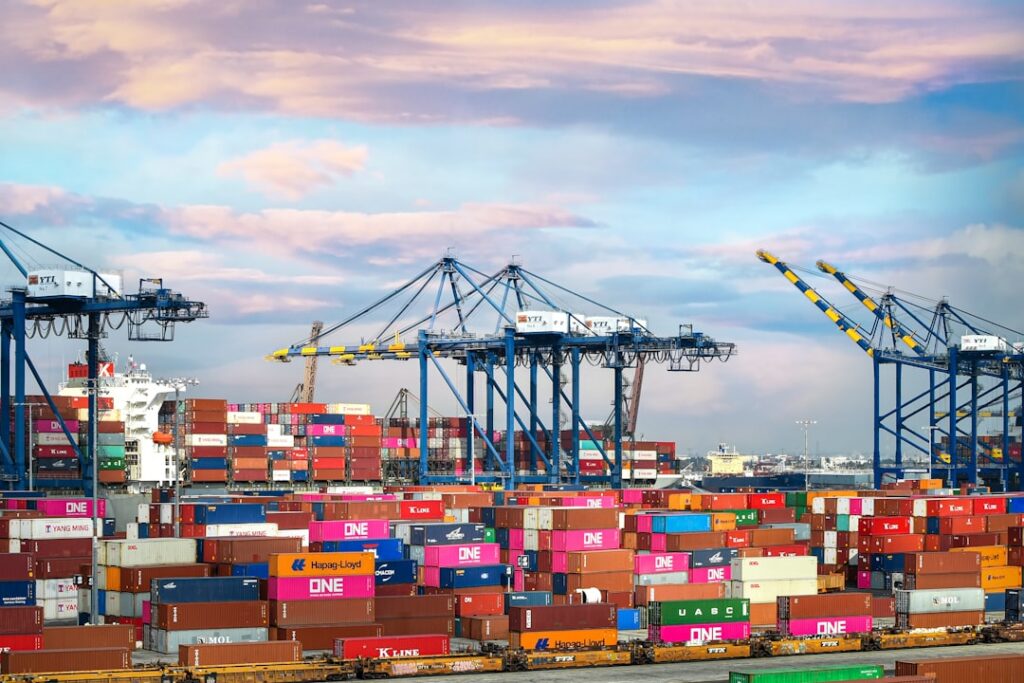
Here’s the mechanic that catches import businesses off guard: customs duties are due when your goods clear the port, not when they sell. You can be sitting on a warehouse full of inventory that’s worth real money and still be cash-poor, because the tariff bill came due weeks or months before a single unit generated revenue. For a business running lean on working capital, that timing gap alone can wipe out an entire cash cushion in one shipment.
This isn’t a small or isolated problem. The Federal Reserve’s 2026 Small Business Credit Survey found that cash flow, not inflation, is now the single most-cited concern among small business owners, and that the typical small business holds only about 27 days of cash buffer. More than four in ten firms told the Fed that tariff-related cost increases were a direct financial challenge, with retail and manufacturing importers hit hardest.
Research from the Federal Reserve Bank of New York backs this up: small firms are far less able to pass tariff costs on to customers than large companies, and they’re projecting sales nearly 9% below normal as a result, more than double the hit large firms expect. When an importer’s margin gets squeezed from both directions at once — higher landed cost, softer sales — an MCA offer that funds in 24 hours can look like the only lifeline in the room.
Why a Merchant Cash Advance Looks Like the Fast Answer

Traditional financing wasn’t built for this kind of emergency. A bank line of credit takes weeks of underwriting. An SBA loan takes even longer, and most lenders want two years of clean financials before they’ll talk to an import business with tariff exposure on the books. When a customs bill is due now, that timeline doesn’t work.
MCA companies fill that gap by design. They advance a lump sum against your future card or bank receivables, in exchange for a daily or weekly debit calculated using a factor rate — typically 1.1 to 1.5 — instead of an interest rate. There’s no traditional underwriting, funding can happen same-day, and for an owner staring down a shipment sitting at the port, that speed is genuinely valuable in the moment.
The catch is what that speed costs. A factor rate of 1.4 on a $50,000 advance means you’re repaying $70,000, often within three to six months, through a fixed daily debit that doesn’t flex if your sales slow down. For a business whose cash flow is already stressed by tariff timing, that rigid payment schedule can turn one bad shipment into a permanent structural problem.
Each Shipment, Another Advance: The Stacking Spiral

This is the pattern that shows up over and over in tariff-hit import businesses: the first advance covers the duty bill on shipment one. Then shipment two’s tariff comes due before the first advance is repaid, and a second funder steps in. By the third or fourth round, an owner is carrying four or five daily debits simultaneously, sometimes totaling more than the business brings in on a slow day.
Each new advance is also priced to reflect the risk of the ones already on the books, which means factor rates tend to climb with every round of stacking. What started as a $40,000 advance at a 1.2 factor rate can turn into $150,000+ in combined daily obligations within a year, and at that point the daily debit itself — not the tariff — becomes the thing threatening the business.
If this sounds familiar, the moment to act is now, before a missed debit triggers a default clause or a lawsuit. Stacked MCA debt is one of the most common positions we see, and it is absolutely solvable — but the earlier a business owner engages with real options, the more leverage there is at the negotiating table.
Real Options Beyond Another Advance

The fix for tariff-driven MCA stacking is not another advance. It’s addressing the balances already on the books through negotiated resolution — and there’s real, established room to do that. MCA funders know that a defaulted account often recovers less than a settled one, which is exactly why structured negotiation works.
Two paths tend to make the most sense for import businesses: a lump-sum settlement, where a business pays a reduced amount in one payment to close the account, or a structured settlement plan, where the daily or weekly debit is replaced with a lower, sustainable payment over a longer term. We’ve seen stacked balances reduced 60%, 70%, even 80% or more in past negotiated settlements. Results vary and are not guaranteed, and every funder evaluates a proposal differently, but the case studies are real and the pattern holds: funders would rather recover most of a balance on new terms than pursue an owner into bankruptcy and recover nothing.
For businesses with strong post-tariff fundamentals, refinancing with an SBA 7(a) loan can sometimes replace high-cost daily debits with a term loan at a fraction of the cost — though this path works best before a business has stacked multiple advances, since SBA underwriting is conservative about existing MCA exposure. It’s worth exploring early rather than after the fact.
The Contract Clauses Stacked Importers Need to Understand

Before negotiating anything, it matters to understand what’s actually in these contracts. Most MCA agreements include a UCC-1 filing against business assets and receivables, which puts the funder ahead of other creditors in a default scenario. Many also include cross-default language, meaning missing a payment to one funder can trigger default across every stacked advance simultaneously — a serious risk for a business already juggling four or five daily debits.
Personal guarantees are common too, and they matter more than most owners realize when they sign: a personal guarantee can expose personal assets even though the business, not the owner, took on the advance. None of this means an owner is trapped — reconciliation clauses, hardship provisions, and settlement negotiation exist precisely because funders anticipate that some advances won’t get repaid on the original schedule.
It’s also worth knowing that MCA practices operate under real regulatory scrutiny. The FTC has pursued multiple enforcement actions against merchant cash advance operators for deceptive practices, including a 2024 judgment of more than $20 million against one MCA operator for deceiving small businesses about funding and collection terms. That oversight doesn’t mean every funder is acting in bad faith — most operate within the rules — but it does mean owners have more standing to push back on unreasonable terms than they might assume.
What to Do Next If Tariffs Have You Stacking Advances

Tariff pressure isn’t going away overnight, and if you’re an import business owner watching duty bills climb faster than your margins can absorb, you are exactly the business owner this article was written for. The instinct to grab another advance to cover the next shipment is understandable — but it’s the move that turns a temporary tariff problem into a permanent debt problem.
There’s a better path. Structured negotiation, lump-sum settlement, and — for businesses that catch it early enough — SBA refinancing all exist as real alternatives to another high-cost advance. Every situation is different, creditors may not always agree to proposed terms, and results vary and are not guaranteed. But the pattern we see again and again is that businesses who address stacked MCA debt head-on, with a clear strategy, come out the other side in far better shape than businesses that keep stacking to survive one more shipment.
This information addresses commercial business debt for import and trade businesses — it is not consumer debt advice, and it isn’t a substitute for advice tailored to your specific contracts and balances. If tariffs have pushed you into stacked MCA debt, or you can see it coming, talk to an MCA Relief Specialist or a business attorney before your next shipment lands. The sooner you start the conversation, the more options are still on the table.
Photo credits: Featured image by John Tuesday on Unsplash; Section 1 by EqualStock on Unsplash; Section 2 by Barrett Ward on Unsplash; Section 3 by Anete Lūsiņa on Unsplash; Section 4 by Meggy Xue on Unsplash; Section 5 by Vitaly Gariev on Unsplash; Section 6 by Signature Pro on Unsplash; Section 7 by Ninthgrid on Unsplash.