
MCA Debt and Business Interruption Insurance

Your BI claim takes 60-90 days to pay out. Your MCA debits every morning. Here's how to bridge the gap without stacking another advance.
Your Claim Is Approved. Your MCA Doesn't Care.

A pipe bursts over the weekend and floods the kitchen. A storm takes out the roof. An electrical fire shuts the whole shop down for repairs. You file the business interruption claim, the adjuster comes out, and everyone tells you the same thing: six to twelve weeks before the check arrives, maybe longer if the carrier wants more documentation on lost income.
Monday morning, the MCA debit hits anyway. The funder doesn’t know about the fire. The contract doesn’t care about the adjuster’s timeline. You’re sitting on a closed location, a claim working its way through underwriting, and a daily withdrawal that assumes you’re open and running at full revenue.
This is one of the quietest traps in merchant cash advance debt, because it doesn’t look like mismanagement. The owner did everything right — carried insurance, filed promptly, cooperated with the claim. The problem is timing: business interruption coverage is built to replace lost income over months, and MCA debits are built to take a cut of revenue every single day. When a disaster knocks out the revenue but not the debit, something has to give, and it’s usually the business’s remaining cash.
This article walks through why that collision happens, what it does to a stacked MCA position, and what actually works while you’re waiting on an insurance payout instead of taking on more debt to survive the wait.
How Business Interruption Claims Actually Pay Out
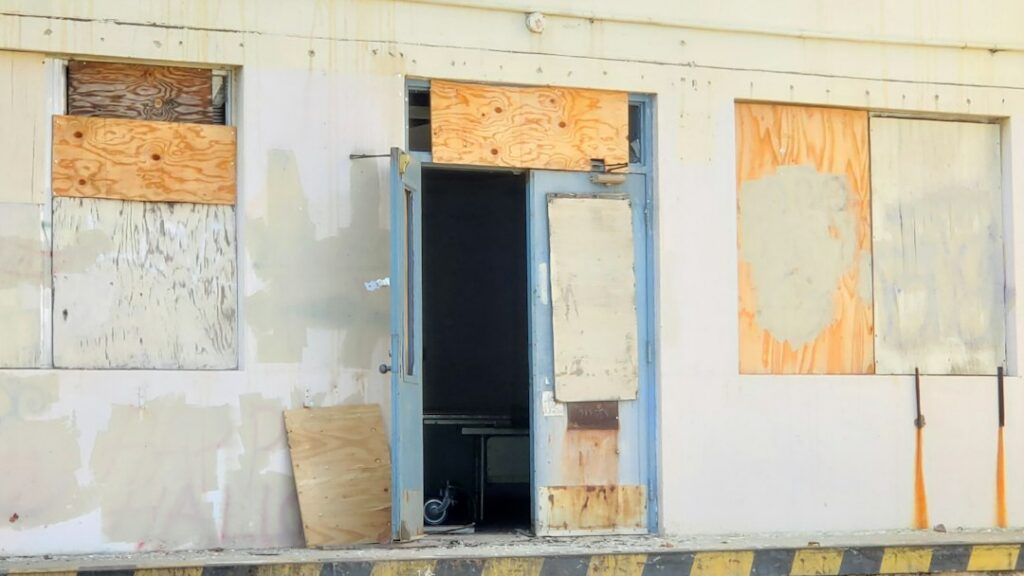
Business interruption (BI) coverage, usually bundled into a commercial property policy, is meant to replace the net income a business would have earned if the covered event hadn’t happened, plus continuing fixed expenses like rent and payroll during the shutdown. In theory it’s designed exactly for this situation. In practice, the payout timeline is the part most owners underestimate.
Carriers typically require a sworn proof of loss, documentation of historical revenue to establish a baseline, and often an independent forensic accountant to verify the claimed loss. Reconstruction or repair timelines get factored in too — if the insurer thinks the location could reasonably reopen in six weeks, that’s roughly what the claim period covers, even if your actual rebuild takes longer. None of that happens overnight, and a contested or unusually large claim can stretch well past 90 days.
The U.S. Small Business Administration’s disaster assistance program exists partly because of this exact gap — physical disaster loans are built to bridge the period between a loss and an insurance settlement, at rates and terms nowhere near what an MCA costs. It’s worth knowing that option exists before reaching for a faster, far more expensive source of bridge cash.
Why the Daily Debit Doesn't Pause for a Claim

Most MCA contracts are written around one assumption: the business keeps processing revenue, and the funder takes its agreed percentage or fixed amount out of that revenue stream every day or week. A reconciliation clause, where one exists, is supposed to let the debit flex down when revenue genuinely drops — but reconciliation provisions are notoriously narrow, often requiring extensive documentation and funder approval before any adjustment happens, and plenty of contracts don’t include a meaningful one at all.
A closed location isn’t a gray area the contract anticipated. It’s a full stop in revenue with a debit schedule that keeps running against whatever is left in the account — savings, a line of credit, sometimes a second MCA taken out specifically to keep the first one current. Funders aren’t necessarily acting in bad faith here; the contract simply wasn’t built to pause itself, and very few funders volunteer flexibility unless the business asks, documents the situation, and asks again.
This is exactly the kind of disruption the Federal Reserve’s Small Business Credit Survey has flagged repeatedly: unplanned revenue shocks are one of the biggest drivers of high-cost financing decisions made under pressure, and MCA debt is frequently the product business owners reach for in exactly these moments — often making a temporary problem permanent.
The Stacking Trap Hiding Inside a Disaster Claim

Here’s where it gets dangerous. An owner with a closed location and a pending claim is often also a strong-looking applicant on paper to a new MCA funder — recent bank statements still show healthy deposits from before the incident, and the owner is motivated to say yes fast. So a second, sometimes a third advance gets layered on just to keep the first one’s debits current while the claim works through underwriting.
By the time the insurance check finally lands, it’s not bridging a gap anymore — it’s getting absorbed into daily debits on two or three stacked positions, with little left over for the repairs or restocking the payout was actually meant to cover. We’ve seen stacked positions where a $60,000 payout was gone within three weeks of landing, split across four funders’ daily pulls, with the business right back where it started.
There’s a lien wrinkle worth knowing too: a UCC-1 filing against “all assets” or “accounts and proceeds” can, depending on the language, reach further than most owners expect — including certain insurance proceeds tied to business property. Reading the actual UCC-1 language a funder filed, not just the advance agreement, matters more than most owners realize until a settlement is already on the table.
What Actually Works While You Wait on the Claim

The hardship request is the first move, and it’s underused. A written request — documenting the date of loss, the claim number, the carrier’s estimated payout timeline, and proof the location is non-operational — gives a funder something concrete to act on. Some will pause or reduce debits for a defined window once they can see the claim is real and moving. Not every funder says yes, but very few consider it without being asked in writing.
ACH revocation is a more drastic lever, and it’s not something to pull without understanding the consequences: it can trigger default under the contract and accelerate the full balance. It has a place in specific situations, but it’s a conversation to have with whoever is negotiating on your behalf, not a first response to a slow claim.
For stacked positions where the math genuinely doesn’t work even once the payout arrives, a negotiated resolution is usually the stronger move. We’ve seen balances settled for 60%, 70%, even 80% below the original amount owed in past cases, particularly when a pending insurance payout gives the business a credible, verifiable source of settlement funds to offer funders up front. Results vary and every funder evaluates differently, but having a defined payout date and amount is real leverage at the negotiating table — far more than an open-ended promise to “catch up eventually.”
The Smarter Bridge: Real Alternatives to Another Advance

Before signing for a new MCA to cover the gap, it’s worth ruling out cheaper bridge options first. SBA physical disaster loans carry rates and repayment terms built for exactly this scenario — a verified loss with a pending insurance settlement — and don’t layer a daily debit on top of an already-strained cash position. A conversation with your existing bank about a short-term bridge, secured against the expected claim proceeds, is also worth having before assuming the answer is no.
If the business is already carrying multiple stacked advances by the time the claim pays out, Subchapter V of the Bankruptcy Code is a tool worth understanding rather than fearing. Created specifically for small businesses, it’s a faster, less expensive reorganization path than traditional Chapter 11 — the U.S. Courts’ bankruptcy basics page lays out how the process works at a high level. It’s rarely the first option, but it’s a real one, and knowing it exists changes how a business owner can negotiate everything else.
None of this is tax advice, but it’s worth flagging: casualty losses and the timing of insurance reimbursement can affect a business’s tax picture for the year, and the IRS’s guidance on business losses is a reasonable starting point before your accountant weighs in on specifics.
The Claim Will Come Through. Make Sure the Business Is Still There When It Does

A business interruption payout is supposed to be the thing that gets a damaged business back on its feet. It shouldn’t become a rescue fund for MCA debits that never paused while the location was closed. If you’re watching a claim work through underwriting while daily debits keep draining whatever’s left in the account, you are not out of options — you’re in a situation that gets fixed through the right sequence of moves, not through panic or another advance.
The first step is usually the hardship request, documented and specific. From there, if the position is already stacked across multiple funders, a structured plan or lump-sum settlement timed around the claim’s payout date is often the strongest path back to stable footing. Every funder evaluates differently, and creditors may not always agree to proposed terms — but a pending, verifiable insurance payout is genuine leverage that most owners don’t realize they’re sitting on.
This information addresses commercial business debt and is not consumer debt advice, and results vary and are not guaranteed — past settlements don’t predict what any individual funder will agree to. What is true in nearly every case: don’t let the wait on a claim talk you into stacking a fourth advance to survive the third. Talk to an MCA Relief Specialist or a business attorney about the specific claim timeline, the specific contracts, and the options that actually fit your numbers before signing anything new.
Photo credits: Featured image by Vanessa Garcia on Pexels; Section 1 by Shelley Pauls on Unsplash; Section 2 by Fredrick Lee on Unsplash; Section 3 by Walls.io on Unsplash; Section 4 by Vitaly Gariev on Unsplash; Section 5 by Marvin Meyer on Unsplash; Section 6 by Vitaly Gariev on Unsplash; Section 7 by Vitaly Gariev on Unsplash.