Laundromat MCA Debt: The Cash-Business Trap

Laundromats look flush to MCA underwriters because of steady cash deposits — but that same pattern is exactly what pulls owners into stacked advances.
The Laundromat Cash Trap: When Steady Deposits Mislead

Run a laundromat and you already know the strange contradiction sitting at the center of your business. Every single day, the card readers and coin boxes fill up like clockwork. Deposits hit the bank on a schedule you could set a watch to. And yet somehow, when a bank of dryers goes down or the water heater needs replacing, there is never quite enough sitting around to cover it — so you sign for a merchant cash advance to bridge the gap, then another one six months later, and now you are lying awake wondering how tomorrow’s daily debit is going to clear.
If that sounds familiar, you are not imagining the trap. You are living inside one of the most predictable patterns in MCA debt: the cash-heavy business that looks perfect on paper to a funder and feels almost impossible to service in real life. This article breaks down exactly why laundromats, car washes, and other steady-cash operations get pulled into stacking faster than most industries, what the contract mechanics actually do to your cash flow once you are in it, and what a real way out looks like — one that does not involve signing for advance number four to make the payment on advance number three.
Why Cash-Heavy Businesses Get Overlent

Merchant cash advance underwriting runs almost entirely off bank statement deposits, not a full picture of debt-service capacity. A funder pulls three to six months of statements, sees consistent daily inflows, and calculates an advance amount and a holdback percentage against that revenue — often without weighing what else is already being debited from the same account. For a laundromat with dependable, high-frequency cash and card deposits, that math looks fantastic on the funder’s side of the table. It looks a lot less fantastic once two or three advances are debiting the same account on the same days.
Part of the reason this gap exists is regulatory. Traditional small-business loans are increasingly subject to federal data-collection requirements meant to standardize how lenders evaluate applicants — but the Consumer Financial Protection Bureau’s small-business lending rule specifically excludes merchant cash advances from that initial data-reporting framework. MCA underwriting stays fast, deposit-based, and largely outside the disclosure standards that govern conventional commercial credit. That speed is exactly what makes it easy to say yes to a laundromat owner in a pinch — and easy to overlend, because nothing in the process forces a funder to ask what happens if the dryers break next month.
The Equipment-Failure Spiral
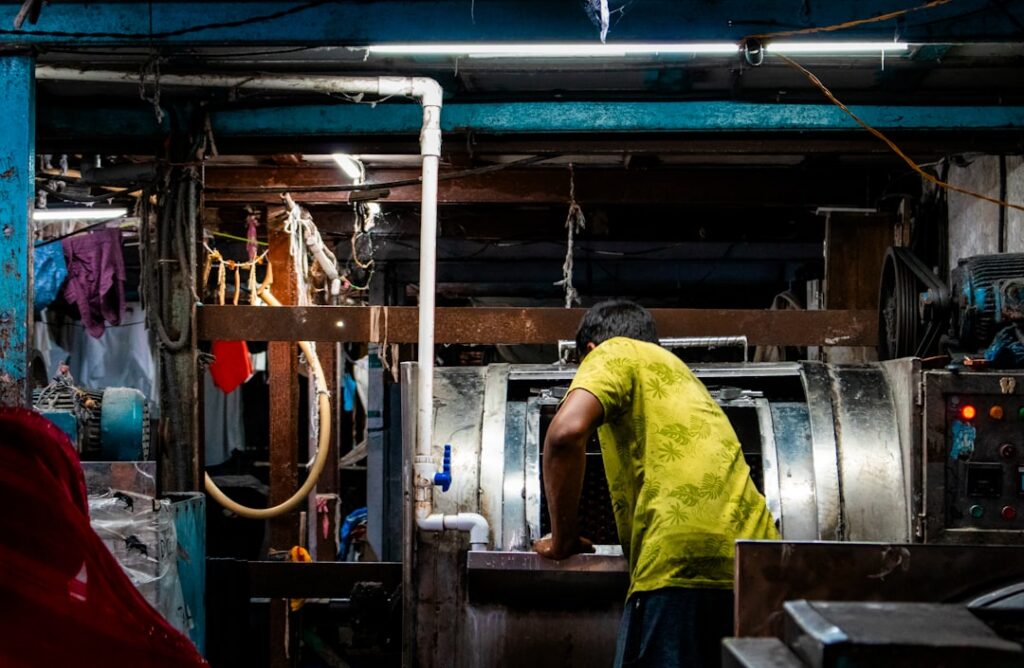
Coin laundry and card-based laundromat equipment is expensive to maintain and unforgiving when it fails. A single commercial dryer bank can run several thousand dollars to repair or replace, and machines rarely break one at a time — a water heater failure or a control-board issue on aging equipment often takes out multiple units in the same week. For a business running on thin week-to-week margins, that is not a line-item expense. It is an emergency.
This is the exact moment an owner reaches for a second MCA, because it funds in days and the underwriting barely blinks at the fact that a first advance is already debiting the account. Now two holdback percentages are pulling from the same daily deposits. When the next repair hits — and in a laundromat, there is always a next repair — a third advance covers it. Owners rarely set out to stack five funders. It happens one broken machine at a time, and by the time someone steps back to look at the total daily draw, it is already unsustainable.
The Factor Rate and Holdback Math Nobody Explains Upfront

An MCA is not a loan and is not priced like one. Instead of an interest rate, funders use a factor rate — typically 1.2 to 1.5 — multiplied against the amount advanced to set the total payback. A $40,000 advance at a 1.4 factor rate means $56,000 owed, full stop, regardless of how quickly it is repaid. There is no early-payoff discount built in the way there is with amortizing debt, unless it is specifically negotiated.
Then there is the holdback: the daily or weekly percentage of card and cash receipts the funder collects until the advance is satisfied. For a laundromat that reports blended cash-and-card revenue, funders often calculate holdback against total estimated receipts, not just the card volume actually flowing through the merchant account — which can make the real effective draw on card revenue far steeper than the headline percentage suggests. Stack two or three of these holdbacks and a laundromat that nets a healthy margin on paper can be handing over 25 to 40 percent of daily receipts before a single dollar reaches payroll, utilities, or the next equipment repair.
UCC-1 Liens, Lockboxes, and the Reconciliation Clause

Most MCA agreements are secured by a UCC-1 financing statement filed against the business’s assets and receivables, which puts the funder’s claim on public record and can make it harder to bring on new financing or refinance equipment while the lien sits open. Stack multiple funders and you often have multiple competing UCC filings, each one complicating any attempt to negotiate fresh terms with a bank or equipment lender.
Many agreements also include a reconciliation clause, which in theory lets a merchant request an adjustment to the daily debit if actual revenue comes in below projections. In practice, getting a funder to honor a reconciliation request can mean phone calls, documentation, and delay while the original debit keeps hitting the account. Some contracts route payments through a lockbox arrangement, where receivables are swept into an account the funder controls before the merchant ever sees the balance — effectively taking the daily cash-flow decision out of the owner’s hands entirely. None of this is illegal, and funders are entitled to structure agreements this way. But it is exactly why a laundromat owner managing three or four of these arrangements simultaneously loses the ability to plan a week ahead, let alone a season ahead.
How Negotiated Resolution Actually Works

The good news: stacked MCA debt on a cash-heavy business is one of the more resolvable situations out there, precisely because funders know these advances were priced for risk and often accept less than the full payback in a structured resolution rather than chase a defaulted account through collections. A negotiated resolution typically means presenting each funder with a hardship case backed by real bank statements, then working toward either a lump-sum settlement at a reduced balance or a structured payment plan sized to what the business can actually sustain — not what a stacked set of holdbacks was demanding.
Reverse consolidation, where a new advance is used to cover payments on existing ones, can occasionally buy short-term breathing room, but it usually adds another daily debit and another UCC filing on top of an already strained cash position — it is rarely the fix it is marketed as. The FTC has taken action against MCA operators for deceptive terms and abusive collection conduct, including a case that permanently banned Richmond Capital Group and its owner from the industry and returned more than $2.7 million to affected businesses. That enforcement history is a reminder that funders operate under real regulatory scrutiny — which is part of why many are willing to negotiate a workable resolution rather than risk a dispute over how an advance was sold.
What to Do Next

If you are running a laundromat, car wash, or any cash-forward business currently juggling more than one merchant cash advance, the math is not going to fix itself by waiting for a stronger month. Stacked holdbacks compound, not average out. The sooner you get an accurate picture of every advance, every UCC filing, and every daily debit against actual receivables, the more room there is to negotiate from strength rather than from a missed payment.
We’ve seen stacked six-figure MCA balances brought down 70%, even 80% or more, through structured negotiation with funders in past settlements — results vary and are not guaranteed, and creditors may not always agree to proposed terms, but a real resolution is possible far more often than owners expect once they actually explore it. This information addresses commercial business debt for laundromats and other small businesses and is not consumer debt advice. Before deciding between settlement, a structured plan, or exploring options like Subchapter V, speak with an MCA Relief Specialist or a business attorney who can walk through your specific contracts and cash position — not another advance, an actual plan to get out from under the ones you already have.
Photo credits: Featured image by Victória Kubiaki on Unsplash; Section 1 by Oles Borys on Unsplash; Section 2 by Power Digital Marketing on Unsplash; Section 3 by Zoshua Colah on Unsplash; Section 4 by Edar on Pixabay; Section 5 by Annika Wischnewsky on Unsplash; Section 6 by Vitaly Gariev on Unsplash; Section 7 by Vitaly Gariev on Unsplash.