
Tree Service MCA Debt: Storm Season Cash Trap

Storm season floods tree service companies with work, but insurance payout delays and daily MCA debits can drain cash faster than jobs get paid.
The Storm Hits, the Jobs Pour In, and the Cash Still Disappears
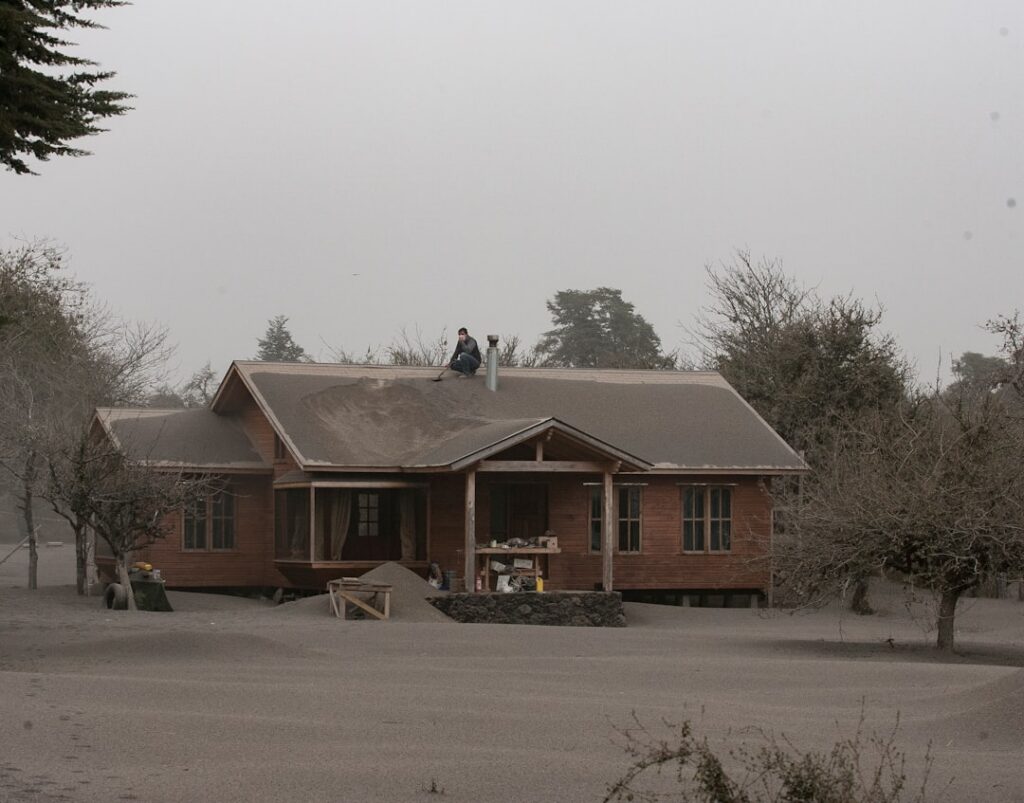
A hurricane comes through, or a straight-line wind event drops trees on half the roofs in the county, and the phone won’t stop ringing. For a tree service company, that should be the best month of the year. Instead, a lot of owners find themselves staring at a bank balance that’s somehow lower than it was before the storm hit — even with a backlog of paying jobs stacked three weeks deep.
Here’s the mechanism nobody explains up front: storm response isn’t free to deliver. Crews need to get paid every week whether the insurance company has cut a check or not. Chippers break. Trucks need diesel. Chainsaw bars and stump grinder teeth wear out fast when you’re running double shifts. Most tree service owners front all of that out of pocket, then wait on the customer’s insurance claim to actually land — and that wait is where a merchant cash advance usually enters the picture.
The advance solves the immediate problem. It also introduces a new one: a fixed daily or weekly debit that doesn’t care whether the insurance company processed the claim yet. This article walks through why that timing mismatch is so brutal for tree service and storm-cleanup companies specifically, what actually happens when the debits outrun the receivables, and what options exist once the mismatch turns into a real cash crunch. This is general information about commercial business debt, not a substitute for advice on your specific situation.
How the Debit Math Works Against a Storm-Driven Business

An MCA isn’t a loan in the traditional sense — a funder purchases a slice of your future receivables at a fixed price, called the factor rate, rather than charging interest over time. A factor rate of 1.35 on a $60,000 advance means you owe back $81,000 total, collected through daily or weekly ACH debits until the balance clears. There’s no amortization schedule and, in most contracts, no early-payoff discount built in as a right — just a fixed total pulled out of the bank account on a fixed cadence.
That structure works fine for a business with steady, predictable daily revenue. It works terribly for one whose revenue arrives in large, delayed lump sums — which is exactly the shape of tree service income after a major storm event. A residential tree removal job tied to an insurance claim can take 60 to 90 days to actually pay out, sometimes longer if the adjuster disputes scope or the homeowner is slow to submit documentation. Meanwhile, the MCA debit hits the account every single business day, storm season or not.
The Federal Trade Commission has taken enforcement action against MCA companies over how factor-rate math and payment terms get disclosed to small business borrowers — worth understanding before signing the next advance to cover a slow season. The FTC’s guidance on merchant cash advances and other financing options is a good starting point for owners trying to understand what they actually signed.
Why Tree Companies End Up Stacking Advances

One advance to cover a slow winter is manageable. The trouble starts when a second advance gets layered on top to make the payments on the first one, then a third to cover payroll after two big claims got denied on scope, and now there are three or four daily debits hitting the same account — a pattern known in the industry as stacking. Every additional funder tightens the daily drain further, and reconciliation clauses (the contract provision that’s supposed to let a merchant request a reduced debit during a slow stretch) often go unused because most owners don’t know the clause exists or how to invoke it.
Most MCA contracts also come with a UCC-1 filing against the business’s assets and receivables, plus a personal guarantee from the owner. That combination means a default doesn’t just threaten the business bank account — it can reach personal assets and, depending on the state, trigger a confession of judgment process that moves faster than most owners expect. Cornell’s Legal Information Institute has a clear overview of how UCC-1 filings work, which is worth reading before assuming a lien is unenforceable or automatically expires.
- Multiple daily debits from different funders hitting the same account
- Reconciliation clauses that exist on paper but were never invoked
- UCC-1 liens layered by each successive funder
- Personal guarantees exposing the owner beyond the business
None of this is unique to tree service — but the industry’s boom-bust revenue pattern, tied to storm timing nobody can predict, makes stacking especially easy to fall into.
The Insurance Timeline Is the Real Villain Here
Commercial insurers and homeowner policies don’t move at the speed of a tree crew. Between the initial estimate, the adjuster inspection, any dispute over whether the removal was storm-related versus routine maintenance, and the actual disbursement, 60 to 90 days is normal and 120-plus days isn’t rare after a large regional event that has adjusters backlogged across an entire county. A tree service company that just fronted a month of crew payroll, fuel, and equipment rental against that claim is now financing the insurance industry’s back office on top of running its own operation.
Data from the Federal Reserve’s Small Business Credit Survey consistently shows cash flow gaps — not lack of demand — as one of the top reasons small business owners turn to high-cost financing in the first place. Storm-driven trades are a textbook case: demand is never the problem, timing is.
When the daily MCA debit is sized against expected weekly revenue but the actual receivable lands in month three, something has to give. Owners typically notice the squeeze first in payroll, then in fuel and equipment maintenance getting deferred, and finally in the MCA debit itself starting to bounce. That bounce is usually the first real signal that it’s time to deal with the debt directly rather than hoping the next storm claim closes the gap.
What Actually Happens When the Debits Outrun the Claims

Missed or bounced MCA debits trigger different responses depending on the funder and the contract, but the pattern is fairly consistent: a demand notice, then attempts to debit smaller amounts more frequently, then — if the account stays short — a referral to collections or, in states that still allow it, a confession of judgment filing that can freeze business and personal bank accounts with very little warning. The CFPB tracks commercial credit complaint patterns that overlap heavily with this exact sequence.
The good news, and it’s real good news: this is a solvable problem, and tree service companies solve it every storm season. A negotiated resolution — whether that’s a lump-sum settlement at a reduced payoff or a structured payment plan sized to actual cash flow instead of the original contract terms — is the standard path funders use to close out an account that can’t service its current debits. Funders would rather recover a negotiated amount than nothing, and most have a settlement desk built specifically for this. We’ve seen six-figure stacked balances resolved at 60%, 70%, even 80% off the original total in past settlements once a specialist got the actual insurance claim timeline in front of the funder.
A hardship request built around the specific claim timeline — showing the funder exactly when the receivable is expected and why the current debit schedule doesn’t match it — carries real weight, especially when it’s backed by adjuster correspondence or a claim number. It’s not a guarantee any individual funder will agree, but it’s the strongest lever a tree service owner has.
Weigh the Full Menu Before Picking a Path

Settlement isn’t the only tool. Reverse consolidation can smooth multiple daily debits into a single lower payment in some situations, though it can also add cost if it’s used to avoid dealing with the underlying stack rather than resolve it. For a tree company carrying serious equipment debt on top of stacked MCAs, Subchapter V of the Bankruptcy Code — a streamlined reorganization path Congress created specifically for small businesses — is worth understanding even if it never becomes necessary. The U.S. Courts’ overview of Chapter 11 for small business debtors explains the mechanics in plain terms.
The SBA’s loan programs page is also worth a look for tree companies with strong equity in trucks and equipment — an SBA 7(a) refinance can sometimes retire an MCA stack at a fraction of the daily cash drain, though qualifying after a rough season is the exception rather than the rule.
The Bottom Line for Storm-Season Cash Flow

Storm season should be the season that makes a tree service company’s year, not the season that buries it in stacked daily debits waiting on insurance checks that haven’t cleared yet. The mismatch between when the work gets done and when it actually gets paid is the root of almost every MCA problem in this industry — and once you name that mismatch clearly, the path out gets a lot more obvious.
If daily debits are outpacing what’s actually landing from claims, don’t wait for the next storm to bail out the last one. Reach out to an MCA Relief Specialist who can look at the actual claim timelines against the current debit schedule and lay out whether a negotiated resolution, a structured plan, or something else fits the situation — or talk to a business attorney if litigation is already on the table. Results vary and are not guaranteed, and creditors may not always agree to proposed terms, but stacked advances get resolved every storm season, and there’s no reason to assume this one can’t be next.
Photo credits: Featured image by maja7777 on Pixabay; Section 1 by Christian Miranda on Unsplash; Section 2 by Vitaly Gariev on Unsplash; Section 3 by Schwoaze on Pixabay; Section 4 by Hans on Pixabay; Section 5 by Vitaly Gariev on Unsplash; Section 6 by 2H Media on Unsplash; Section 7 by Vitaly Gariev on Unsplash.