MCA Debt and Equipment Liens: What Wins

Your MCA funder's lien covers 'all assets' - but a properly financed piece of equipment can still beat it. Here's the exception that matters.
"All Assets" Doesn't Always Mean All Assets

Most merchant cash advance contracts include a UCC-1 filing described in sweeping terms — a blanket lien on “all assets now owned or hereafter acquired” by the business. Read that language on its own and it sounds absolute: whatever the business owns, or ever will own, is collateral for the advance. Business owners who later finance a new piece of equipment — a delivery truck, a piece of manufacturing machinery, a specialty tool — reasonably assume that new asset just got swept into the MCA funder’s existing claim the moment it arrived on the balance sheet.
That assumption is wrong more often than it seems, and the reason is one of the more useful exceptions built into secured lending law. A properly structured and properly filed equipment loan can actually leapfrog an earlier, broader MCA lien on that one specific piece of equipment — even though the MCA funder filed first. This article explains how that exception works, why it matters enormously for a business trying to protect essential equipment during MCA default or settlement, and where owners most often get it wrong.
How a Blanket MCA Lien Actually Reaches New Assets

The mechanism that lets an MCA funder’s lien follow new purchases is called “after-acquired property” language. As Cornell Law School’s Legal Information Institute explains, this is collateral a debtor acquires after the original security agreement was signed, which still becomes part of the lender’s collateral base under a properly drafted blanket lien. In plain terms: if the original MCA agreement included after-acquired property language (and most standard “all assets” MCA agreements do), new equipment purchased later is, by default, swept into that existing lien automatically, without the funder having to file anything new.
That default outcome is exactly why the exception matters so much. Without it, a business could never finance new equipment without effectively handing the MCA funder a claim on it — which would make growing or replacing equipment while carrying MCA debt nearly impossible. The exception exists because equipment lenders and sellers need a realistic path to actually get paid on the specific thing they financed, even when a business already has other debt in place.
The PMSI Exception: How a Later Lien Can Still Win

The exception is called a purchase-money security interest, or PMSI. A purchase-money security interest, per Cornell’s Legal Information Institute, is a security interest a lender takes specifically in the collateral it financed the purchase of — and under the Uniform Commercial Code, a properly perfected PMSI can take priority over an earlier, broader blanket lien on that specific piece of equipment, even though the blanket lienholder filed its UCC-1 first.
This is a genuine carve-out from the ordinary first-to-file rule that governs most lien priority disputes. To get that priority, the equipment lender generally has to perfect its interest correctly and promptly — typically by filing its own UCC-1 within a short window (often 20 days) after the business takes possession of the equipment, and in some cases formally notifying any existing blanket lienholder that a PMSI is being taken in specific new collateral. Done correctly, the equipment lender or seller ends up with first claim on that one asset, while the earlier MCA lien remains in place over everything else the business owns.
Why This Matters When MCA Debt Gets Serious

This distinction becomes very practical the moment MCA debt heads toward default. When a funder moves to enforce its UCC lien, it’s generally reaching for whatever business assets its filing actually covers — but if a piece of essential equipment carries a properly perfected PMSI from a separate lender, the MCA funder’s blanket lien is subordinate to that PMSI on that specific asset. In real terms, that can mean the equipment a business genuinely needs to keep operating and generating revenue stays out of reach of the MCA funder’s collection efforts, even while other assets and the overall balance remain very much in dispute.
The reverse situation matters just as much: a business considering equipment financing or leasing, as the U.S. Small Business Administration frames it, while an MCA blanket lien is already in place needs the equipment lender to actually perfect a proper PMSI — filed correctly and on time — or risk that new equipment simply becoming additional collateral for the existing MCA lien with no special protection at all.
Where Owners and Dealers Get This Wrong

The PMSI exception only works if it’s executed correctly, and it’s surprisingly easy to miss the requirements:
- Equipment dealers and lenders sometimes don’t file their UCC-1 within the required window, quietly forfeiting the priority they’d otherwise have.
- Notice requirements to existing blanket lienholders get skipped, especially with smaller or less experienced equipment financiers.
- Business owners assume verbal or informal financing arrangements carry the same protection as a properly filed PMSI — they don’t, since priority depends entirely on the filing being done correctly.
Any of these gaps can mean equipment a business believed was protected turns out to be fully exposed to an earlier MCA lien after all. Getting a lien search done on a piece of essential equipment, rather than assuming protection exists, is the only way to know for certain where it actually stands.
A Composite Case: The Loader That Stayed Out of Reach
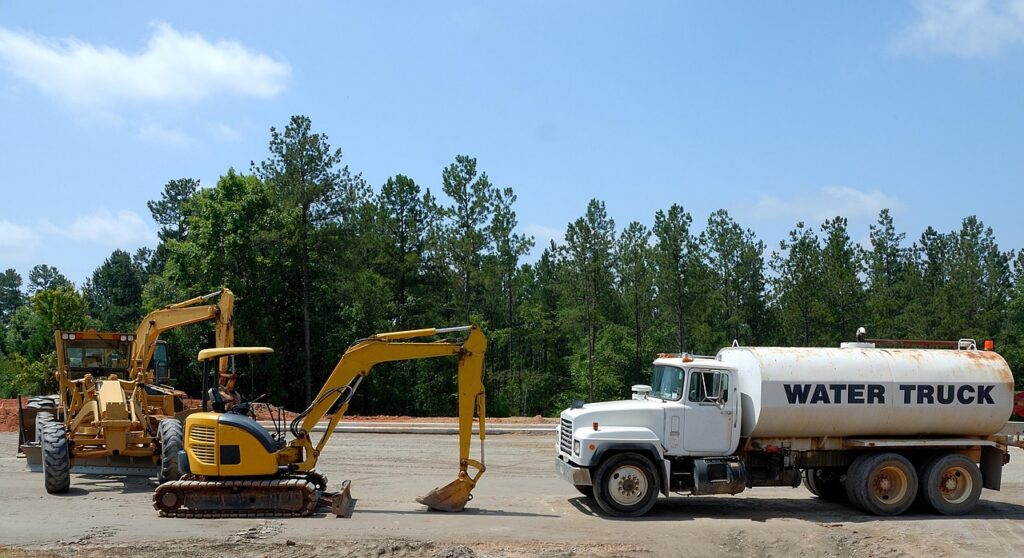
Consider a composite scenario built from patterns seen across many small businesses: a small excavation and grading company had an MCA blanket lien in place from an earlier advance, then financed a new skid steer loader through a separate equipment lender roughly a year later. When the MCA balance went into default and the funder moved to enforce its lien against business assets, the owner discovered through a lien search that the equipment lender had properly perfected a PMSI in the loader at the time of purchase — meaning it sat outside the MCA funder’s reach entirely.
That protection let the business keep the loader working and generating revenue while the owner negotiated the MCA balance itself, roughly $86,000, through a structured settlement resolved at approximately $27,000, close to a 69% reduction. Results like this depend entirely on whether the equipment lien was actually perfected correctly at the time of purchase — results vary and are not guaranteed, and every equipment loan, every MCA contract, and every business’s paperwork is different.
Check the Filing, Not Just the Contract Language

An “all assets” clause in an MCA contract sounds final, but it isn’t automatically the last word on every piece of equipment a business owns or later acquires. Whether a specific asset is truly exposed to that lien depends on the actual UCC filings on record — not just what the MCA contract says it covers. That’s true whether a business is trying to protect equipment during a default, or trying to finance new equipment while an MCA lien is already in place.
Getting a full lien search done before assuming either outcome is worth the time, and it can materially change the negotiating position on the underlying MCA balance. Creditors may not always agree to proposed terms, and every situation is different. Speak with an MCA Relief Specialist or MCA Options Specialist about resolving the MCA balance itself, and a business attorney about reviewing your specific UCC filings and any equipment financing in place. This information addresses commercial business debt and is not consumer debt advice or a substitute for a lien review by qualified counsel.
Photo credits: Featured image by dimitrisvetsikas1969 on Pixabay; Section 1 by Magnum ENP on Unsplash; Section 2 by Homa Appliances on Unsplash; Section 3 by www.kaboompics.com on Pexels; Section 4 by RDNE Stock project on Pexels; Section 5 by Edar on Pixabay; Section 6 by paulbr75 on Pixabay; Section 7 by Pexels on Pixabay.