MCA Default: What Happens and How to Respond

A missed MCA debit triggers a fast-moving escalation process. Here's the timeline from first bounce to potential judgment — and what to do at each stage.
The Morning the Debit Bounced

It usually happens on a Monday. The daily ACH debit hits the account, there isn’t enough to cover it, and the bank returns it. Within hours — sometimes within minutes — the calls start. The MCA funder’s collections team has automatic alerts on NSF returns. By mid-morning you may have three or four calls logged from numbers you don’t recognize, and an email with the subject line “Notice of Default” sitting in your inbox.
This is the beginning of the MCA default timeline, and how you respond in the first 30 days has an enormous impact on how the situation resolves. Most business owners either ignore the calls out of stress or try to negotiate alone — and both approaches tend to leave better outcomes on the table.
The instinct to panic is understandable. The right move is the opposite: slow down, understand exactly what your contract says about default, and get a clear picture of your options before taking any action. The window for the best outcomes is open right now. It closes as the situation escalates.
Days 1 to 30: What Funders Do After a Missed Payment
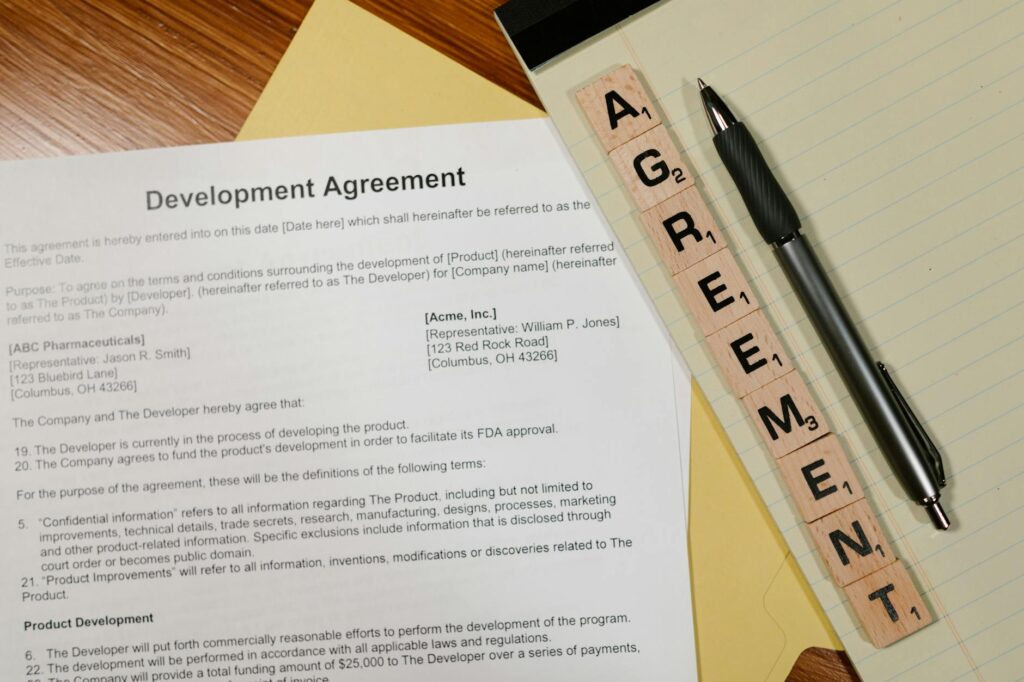
MCA contracts almost universally include an acceleration clause: if you miss a payment, the funder can declare the entire remaining balance immediately due — not just the missed debit, but every dollar left on the advance. That clause is typically triggered automatically by a returned ACH. The funder doesn’t need to call you first.
In the first 30 days, expect: daily or near-daily collection calls, written default notices, and in some cases an offer to settle the default for a lump sum — sometimes at a meaningful discount. That settlement offer is real. Funders make it because they know that litigation is expensive and uncertain. A quick resolution is worth something to them.
What you should not do in this window: make partial payments without a written agreement on how they’re being applied, ignore the default notice, or assume the situation will resolve itself. Partial payments without an agreement can sometimes restart the clock on collection timelines in ways that are not in your favor. Get any payment or settlement arrangement in writing before funds transfer.
Confession of Judgment: The Clause That Changes Everything

Many MCA contracts — particularly older ones and those originated with funders operating in certain states — contain a confession of judgment clause (COJ). A COJ is a contractual provision by which you pre-authorize the funder to obtain a court judgment against you without filing a lawsuit, presenting evidence, or giving you an opportunity to contest the claim. The funder simply files the signed COJ with a court, and a judgment is entered.
New York prohibited COJs in commercial contracts in 2019 following a major investigation by the New York Attorney General’s office that documented widespread abuse of the provision against small business owners. But COJs remain legal in many other states. According to Cornell Law’s Legal Information Institute, a COJ entered against a business can be enforced like any other court judgment — bank account levies, asset liens, wage garnishment against business principals in some cases.
If your MCA contract contains a COJ clause, the default timeline is compressed. A funder with a COJ can move from missed payment to judgment far faster than the typical litigation process. This is one of the most important reasons to review your contracts with a specialist before a default situation arises — or immediately after one does.
UCC Enforcement: What Funders Can Actually Do

When your MCA was funded, the funder almost certainly filed a UCC-1 financing statement against your business. This blanket lien covers all of your business assets — receivables, inventory, equipment, bank accounts — and it gives the funder a secured interest in those assets in the event of default.
A UCC-1 does not automatically allow a funder to seize your assets. What it does: it establishes their priority position among creditors, it can complicate your ability to obtain other financing (lenders see the lien), and in default it provides the legal basis for collection actions including lockbox arrangements — where your business deposits are routed through an account controlled by the funder before you receive any funds.
The FTC’s enforcement action against RCG Advances documented how some MCA companies used UCC filings and aggressive collection practices against businesses that were already in financial distress. Understanding what your funder can and cannot legally do under your specific contract is essential before deciding how to respond to a default.
Your Options Before a Judgment Is Entered

The most important window is the period between default and any court judgment. Before a judgment is entered, you have the most flexibility — and funders have the most incentive to negotiate, because litigation costs them too.
- Hardship modification: Some funders will agree to temporarily reduce daily debits or extend the term if you can document genuine financial hardship. This works best when you’re current or just one payment behind.
- Negotiated lump-sum settlement: Funders regularly settle defaulted advances for less than the outstanding balance — sometimes significantly less. We’ve seen reductions of 50%, 70%, even more in past cases through structured negotiation before litigation was filed. Results vary and are not guaranteed.
- ACH revocation: You have the right to revoke a funder’s ACH authorization through your bank. This stops the daily debits but triggers formal default — and needs to be executed as part of a strategy, not as a standalone action.
- Subchapter V Chapter 11: For qualifying businesses, Subchapter V bankruptcy can restructure all debt simultaneously under court protection. It requires a business attorney and formal filing, but it stops all collection actions including COJ enforcement.
Creditors may not always agree to proposed terms — but the earlier you engage, the more options remain available. Waiting until a judgment is entered narrows the field significantly.
Settlement After Default: Real Numbers

The settlement outcomes that are possible after MCA default consistently surprise business owners who assume funders won’t negotiate. In reality, MCA companies are financial businesses — they make rational decisions about recovery. A settlement at $0.30 on the dollar today, without the cost and uncertainty of litigation, is often the better business decision for the funder.
Past completed settlements from cases handled through structured negotiation:
- $193,028 judgment avoided and resolved for $100,000 — 48% reduction
- $47,968 balance settled for $13,000 — 73% reduction
- $211,591 judgment avoided and settled for $61,000 — 72% reduction
- $50,000 purchased amount resolved for $15,000 — 70% reduction
- $96,675 balance settled for $20,210 — 79% reduction
These are completed cases. Past performance does not predict future results, and outcomes vary based on the funder, the contract terms, your business’s financial position, and the negotiating approach. Some creditors are more resistant than others. But these results represent what’s been possible — and they all started with a business owner who decided to stop managing the situation alone and get experienced help.
Don't Wait Until You're Served: Act Now

The single most consistent pattern in MCA default cases is this: the business owners who get the best outcomes are the ones who engaged early — before a judgment was entered, before a lockbox was established, before litigation made negotiation more complicated. The business owners who struggle are the ones who waited, hoping the situation would resolve itself or that avoiding the calls would buy more time. It rarely does.
If you’ve missed a debit, received a default notice, or are watching your account balance disappear into multiple simultaneous MCA debits, the time to act is now — not after the next bounce. Talk to an MCA Options Specialist who can review your contracts, explain exactly what your funders can and cannot do, and lay out a concrete strategy for your specific situation.
This article is general information about commercial business debt — it is not consumer debt advice, legal advice, or financial guidance for your specific situation. Results vary and are not guaranteed, and creditors may not always agree to proposed terms. But the options we’ve described are real, they work, and they’ve helped business owners across industries get out from under MCA debt they thought was permanent. You don’t have to navigate this alone.
Photo credits: Featured image by www.kaboompics.com on Pexels; Section 1 by www.kaboompics.com on Pexels; Section 2 by RDNE Stock project on Pexels; Section 3 by Mikhail Nilov on Pexels; Section 4 by RDNE Stock project on Pexels; Section 5 by RDNE Stock project on Pexels; Section 6 by Khwanchai Phanthong on Pexels; Section 7 by MART PRODUCTION on Pexels.