MCA Reconciliation Clause: What Your Contract Hides

Your MCA contract has a reconciliation clause that was supposed to protect you when revenue drops. Here's why it rarely works — and how to use it anyway.
The Clause That Was Supposed to Protect You

You signed a merchant cash advance agreement because you needed capital and you needed it fast. Maybe it was your first advance. Maybe it was the third. Either way, somewhere in the contract — often on page four or five, buried in a dense block of legal text — there was a reconciliation clause. It sounded like protection. It said your daily payments were tied to a percentage of your actual revenue, and that if your revenue dropped, so would your remittances.
That clause is part of why MCAs are structured the way they are. And it’s why some business owners sign thinking they have a built-in safety net for slow months. Here’s what most owners discover too late: reconciliation clauses look like a lifeline on paper and function like a locked door in practice. If your revenue has dropped and your daily debits haven’t budged, you’re living that gap right now. Understanding what the clause actually says — and what it would actually take to invoke it — is the first step to understanding your real options.
This isn’t a reason to panic. It’s a reason to understand the leverage you actually have. The reconciliation provision, even when a funder refuses to honor it, creates something useful: documentation. And in MCA restructuring, documentation is currency.
What a Reconciliation Clause Actually Says
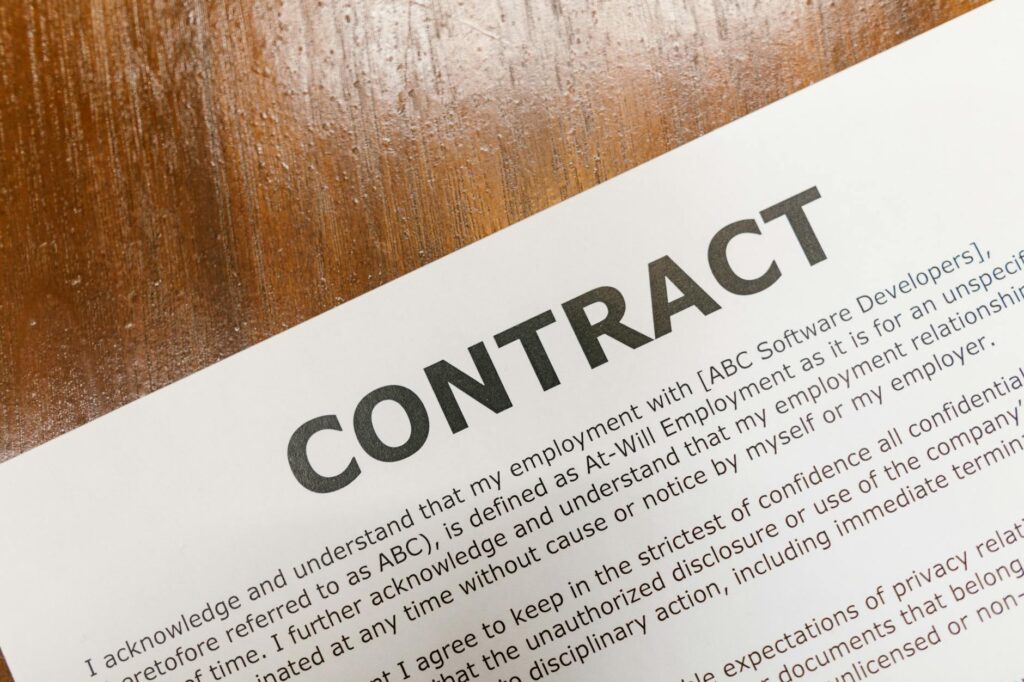
In MCA contract language, the reconciliation clause is the provision that frames the entire advance as a purchase of future receivables rather than a loan. The core argument is this: because the funder is buying a percentage of your future sales — typically somewhere between 10% and 20% of daily credit card and ACH receipts — your daily remittance should fluctuate with actual revenue, not stay fixed like a loan payment. When your revenue is up, more flows to the funder. When it’s down, the pull should decrease proportionally.
In a true revenue-based remittance structure, a slow month at a restaurant or a dry week for a landscaping company would translate directly to a lower daily debit. The reconciliation clause is the mechanism that’s supposed to make that adjustment happen. It’s also how MCA companies defend the legal argument that these products are sales contracts — not loans — and therefore not subject to usury laws or the Truth in Lending Act disclosures that govern conventional credit. The Consumer Financial Protection Bureau has documented the regulatory gap that merchant cash advances have historically occupied, which stems directly from this revenue-purchase framing.
The clause varies by contract. Some agreements specify a monthly reconciliation process with a formal request window. Others describe reconciliation as an ongoing right. What almost all of them share is this: the reconciliation process is not automatic. You have to ask for it, and you have to ask correctly.
Why Reconciliation Requests Almost Always Fail

Here’s where the contract language and operational reality split. Most MCA agreements specify that the daily remittance amount is an estimated payment based on projected revenue — and that if you want the actual reconciliation (meaning the funder adjusts the pull to match your real revenue), you have to formally request it. The request process is, in most cases, deliberately demanding.
Typical documentation requirements include bank statements for the prior 30 to 90 days, merchant processing statements, business tax returns, profit and loss statements, and a formal written request submitted to the correct department within a specific window — sometimes 30 days from a defined trigger date. Miss the window or miss a document, and the request is denied. Submit everything correctly, and the funder may still delay, dispute your revenue figures, or deny the request on grounds that the daily amount is already the contractual estimate rather than the actual percentage.
The FTC has taken enforcement action against MCA companies that used reconciliation language to misrepresent the true nature of their products. In the action against RCG Advances LLC (FTC v. RCG Advances), the Commission alleged that merchants were promised flexibility that was never actually delivered — reconciliation clauses that existed on paper but were functionally inaccessible. That pattern is not unique to one company. It’s a structural feature of how many MCA agreements are written and enforced.
Because the fixed daily estimate is contractually defensible, funders have little financial incentive to reduce pulls voluntarily. They pull the number they agreed to until you formally force the issue — and even then, many fight it. The clause is designed to protect the funder’s legal argument, not to give you actual breathing room in a slow month.
The Math: What a Specified Percentage Really Means

Real numbers make this concrete. Suppose you took a $60,000 advance with a factor rate of 1.38 — common in the market. Your total payback is $82,800. Your funder estimated your daily revenue at $5,000 and structured your daily remittance at 15% of that: $750 per day. Over roughly 110 business days, you pay back the full balance.
Now suppose your actual daily revenue drops to $2,800 — you’re a contractor in a wet spring, or a retailer in a post-holiday slump, or an e-commerce seller absorbing a platform fee increase. The true 15% remittance on $2,800 in daily revenue is $420 per day, not $750. That’s a $330 difference — roughly $6,600 per month that should be staying in your account under the terms of the contract you signed. Over three months of slow revenue, that gap becomes nearly $20,000 in excess cash drain.
The U.S. Small Business Administration consistently identifies cash flow management as the top financial challenge for small businesses. When daily debits are pulling at the estimated rate regardless of actual revenue, that challenge becomes a crisis. Most owners don’t realize the shortfall is happening because the contract, not their revenue, is driving the pull.
To get the adjustment down to $420, you’d need to trigger the reconciliation process — documentation, formal request, funder review, and approval. Most owners don’t know the process exists until they’re already in trouble. By that point, the damage is done and the negotiating dynamic has shifted.
Reconciliation and the Broader Legal Picture

The reconciliation clause doesn’t exist in isolation — it’s the legal cornerstone of the entire MCA structure. If a court determines that the revenue-purchase framing is a legal fiction and that the advance is really a fixed-repayment loan in disguise, the entire factor-rate structure becomes vulnerable to usury law challenge. That’s why MCA companies defend the clause aggressively. It’s not about protecting your cash flow — it’s about protecting their legal classification.
Courts across different jurisdictions have split on this question. Some have upheld the purchase-of-receivables framing and found MCAs to be legitimate sales contracts. Others have looked past the label to the economic substance — specifically, whether reconciliation was genuinely available to the merchant or whether it was contractually present but practically inaccessible. The key distinction is real-world enforceability, not contract language alone.
Cornell Law’s Legal Information Institute provides context on how the merchant cash advance structure interacts with contract law and lending frameworks — useful background for any business owner trying to understand what their contract actually means in a dispute or restructuring context.
When a funder refuses a legitimate reconciliation request without justification, or when the process is structured to be practically inaccessible despite genuine revenue decline, those facts can become relevant in structured negotiations. A business attorney or MCA Options Specialist can evaluate whether the funder’s denial strengthens the case for a hardship adjustment, payment restructuring, or negotiated settlement.
Using the Reconciliation Clause as a Negotiating Tool

If your funder has denied a reconciliation request — or if you’ve never been told you could file one — that information has real value in a restructuring conversation. Here’s why: the reconciliation provision is the funder’s own contractual argument that this isn’t a fixed-repayment product. When they refuse to honor it without valid grounds, they’re arguing out of both sides of their mouth. That inconsistency can create useful leverage.
A structured approach to MCA restructuring often follows a sequenced path:
- Document the actual revenue shortfall with bank statements and processor records, and file a formal reconciliation request — even if you expect it to be denied, the denial is part of the record
- Pursue a parallel hardship request or forbearance discussion, referencing the revenue data already assembled
- Open settlement discussions with the goal of a lump-sum resolution at a discount to the remaining balance — past cases have seen reductions of 70%, 80%, even 90% on original balances, depending on the funder and circumstances
- Alternatively, negotiate a structured extended payment plan built around what the business can actually sustain, rather than the original estimated daily amount
Large-scale funders — OnDeck Capital, Forward Financing, Everest Business Funding, Funding Metrics — operate at volume and have established workout processes. They expect a percentage of their portfolio to end up in negotiated resolution. They’re not shocked by the conversation. What matters is who’s having it and what documentation they bring to the table. The reconciliation clause, properly deployed, is not a magic solution — but it’s a documented contractual gap between what the agreement promised and what the funder actually delivered.
What to Do If Your Reconciliation Is Not Working

If you are stuck in a fixed daily debit pattern and your revenue has dropped significantly, you are not out of options — but the window for proactive action is narrower than most owners realize. Missed debits trigger default provisions quickly, and once a funder files for collection, the negotiating dynamic shifts unfavorably. The time to act is before that happens.
Start with the contract. Read the reconciliation clause. Find the process, the timeline, and the documentation requirements. If you haven’t filed a formal request, do it now — and document every step. If the funder denies the request, get that denial in writing. That paper trail matters.
Then talk to someone who negotiates with MCA funders professionally. An MCA Relief Specialist understands the leverage points embedded in these contracts, knows how specific funders respond to hardship discussions and settlement proposals, and can evaluate whether a negotiated lump-sum resolution, structured payment plan, or another path is the right fit for your situation. We have seen six-figure balances negotiated down to a fraction of the original payback amount — results vary and are not guaranteed, and past performance does not predict future results, but the options are real and more business owners than you’d think have worked their way out of stacked, unworkable MCA obligations on terms they could actually sustain.
This information addresses commercial business debt and is not consumer debt advice. Creditors may not always agree to proposed terms — every situation is different, and the right strategy depends on your specific contracts, your revenue picture, and which funders you’re dealing with. For guidance on your specific situation, speak with an MCA Relief Specialist or a business attorney before making any decisions about your payments or your business.
Photo credits: Featured image by cottonbro studio on Pexels; Section 1 by www.kaboompics.com on Pexels; Section 2 by RDNE Stock project on Pexels; Section 3 by MART PRODUCTION on Pexels; Section 4 by Jakub Zerdzicki on Pexels; Section 5 by RDNE Stock project on Pexels; Section 6 by Ron Lach on Pexels; Section 7 by www.kaboompics.com on Pexels.